
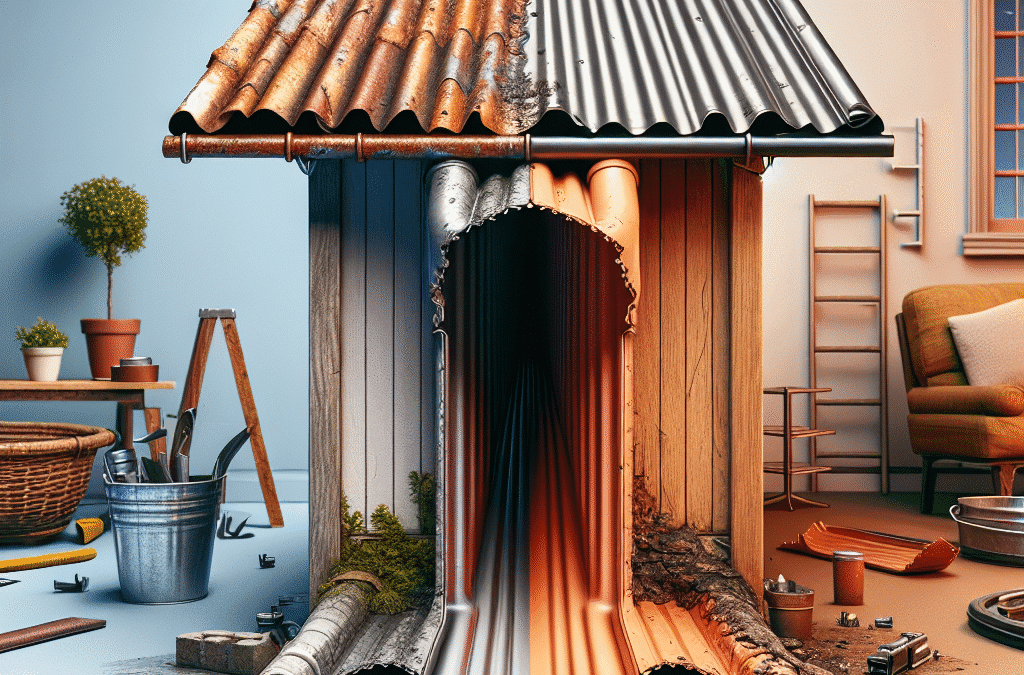
Picture this: a torrential downpour hits your neighborhood, but your home stands strong, sheltered from overflow and water damage, thanks to a well-functioning gutter system. Gutters are a crucial part of your home’s defense against the elements, and keeping them in top shape can save you thousands in potential water damage repairs. But when your trusty gutters start showing signs of wear, you’re faced with a common predicament: should you repair them or go for a complete replacement? Making the right choice isn’t just about maintaining your home’s aesthetics and structural integrity—it’s about protecting your wallet, too. The average cost to repair water damage is around $8,000, so choosing wisely is paramount. Fear not, we’re here to guide you through this decision, helping you weigh your options carefully based on your situation and budget. Let’s dive in and ensure that your home remains your sanctuary, rain or shine.
Signs Your Gutters Need Attention
Your home’s gutters serve as an essential barrier against water-related damage, so maintaining them is crucial. Recognizing when your gutters require attention can prevent costly repairs and ensure they continue to function effectively. Below, we discuss the key indicators that your gutters may need repair or replacement.
Visual Indicators of Gutter Problems
When inspecting your gutters, certain visual cues can signal issues that need addressing. Keep an eye out for sagging sections, which may indicate that your gutters are struggling to support the weight of debris or water. Visible rust or corrosion can also suggest aging and deterioration, especially prevalent in older metal gutters. Separated joints are another telltale sign of wear and tear. These splits can compromise the entire system’s integrity, leading to leaks and water damage. Additionally, if you notice peeling paint or discoloration near your gutters, it might be a sign of moisture damage due to leaks or overflow.
Performance Issues That Shouldn’t Be Ignored
Visual signs are not the only indicators of gutter problems; certain performance issues also warrant attention. If you experience water overflow during rain, this may indicate your gutters are blocked or unable to handle the volume of water. Improper drainage can further exacerbate the situation, leading to water pooling around your home’s foundation—a significant risk for structural damage. When these performance issues occur, it’s essential to consider gutter repair options promptly. Early intervention can prevent minor issues from becoming costly problems.
Ensuring your gutters function correctly is as important as installing them. Minor repairs like sealing leaks or reattaching loose sections often suffice, especially when handled in a timely manner. However, knowing when to move beyond these fixes to a more comprehensive solution, like replacing entire sections, can save time and money in the long run.
Whether dealing with visual wear or performance hiccups, the key is to assess these signs early, preferably with professional help if you’re unsure. By staying vigilant and proactive, homeowners can maintain a gutter system that efficiently protects their home from water damage, supporting a durable and safe structure for years to come.
Signs Your Gutters Need Attention
Visual Indicators of Gutter Problems
Your home’s gutters play a critical role in protecting your property from water damage. However, spotting signs of trouble early on can be the difference between a simple repair and an extensive replacement. Keep an eye out for visual cues that may indicate your gutters are in distress. Look for sagging sections as they suggest inadequate support and potential overflow issues. Visible rust or corrosion can compromise the gutters’ structural integrity, while separated joints might lead to leakage. If you notice peeling paint near the gutters, it often signals that water is not being properly directed away from your home.
Performance Issues That Shouldn’t Be Ignored
Beyond what you can see, it’s essential to pay attention to how your gutter system performs. If you notice water overflowing during rainstorms, it’s a sign that the gutters aren’t handling the water as they should be. Improper drainage can lead to pooling water around your foundation, posing a significant risk of structural damage. These functional problems suggest it’s time to consider gutter repair before the situation worsens. Addressing these issues promptly can save you from the expense and headache of larger home repairs down the line.
Understanding Gutter Repair Costs and Options
Common Repair Scenarios and Their Price Ranges
When it’s time to roll up your sleeves and tackle those gutter issues, knowing what you’re likely to spend can help you budget more effectively. Minor repairs, such as sealing leaks or reattaching loose sections, can typically run between $100 and $300. For moderate repairs like fixing sagging areas or addressing multiple leaks, expect to spend $300 to $500. Major repairs involving extensive damage or section replacements might exceed $500. Understanding these costs can help you determine the most cost-effective solution for your gutter problems.
Repair Costs By Gutter Material
The cost of gutter repairs can vary significantly depending on the material of your gutters. Here’s a quick rundown of what you might expect based on material type:
- Vinyl/PVC: $75-$200
- Aluminum: $85-$200
- Steel: $100-$225
- Copper: $125-$250
- Zinc: $150-$325
These figures can guide you in estimating repair costs for your specific gutter system.
When Repair Makes Financial Sense
Deciding between repair and replacement often boils down to financial considerations. If your gutters have isolated damage, are less than 10 years old, or you’re working within a tight budget, opting for gutter repair makes sense. Repairs can extend the life of your gutters without breaking the bank, especially if the overall system is still in good condition. By choosing repairs when it’s financially sensible, you ensure your home remains protected from the elements while keeping expenditure in check.
Conclusion
In making the critical decision between gutter repair and replacement, it’s important to evaluate the current state and functionality of your gutters. We have explored the visual cues and performance issues that can indicate the need for attention. Repairs might be the most cost-effective choice for gutters with isolated damage, especially if they are less than 10 years old, while a replacement may be more beneficial for older systems with extensive issues.
Consider the material and scale of your home when budgeting for either option. While repairs generally cost between $150 and $650, a replacement, though having a higher initial cost, can extend the life of your home’s gutter system and offer reduced long-term maintenance expenses.
Seamless gutters, albeit more expensive, can offer better durability due to fewer leak points compared to sectional systems. Your choice of material should align with your home’s needs and the regional climate, ensuring lasting performance and aesthetic appeal.
Ultimately, addressing gutter issues promptly is a proactive step in preventing costly water damage, potentially saving you thousands in the long run. For comprehensive guidance tailored to your home, consider scheduling a professional consultation to expertly assess and recommend the best course of action for your specific situation.
Repair Costs By Gutter Material
When it comes to gutter repairs, the type of material your gutters are made from can significantly impact the cost. Each material has its own price range for repairs, largely due to the differences in each one’s durability, popularity, and availability.
Vinyl/PVC Gutters
Vinyl or PVC gutters are some of the most affordable options when it comes to repair costs. Generally, you can expect to spend between $75 and $200 for fixing issues with these types of gutters. Their lightweight nature makes them easy to work with, but they may not hold up as well in extreme temperatures.
Aluminum Gutters
Aluminum gutters are another popular choice due to their reasonable balance of cost and durability. Repairing aluminum gutters typically falls within the $85 to $200 range. They are resilient to rust and perform well in a variety of weather conditions, making them a common choice for many homeowners.
Steel Gutters
Steel gutters, being more robust than vinyl or aluminum, naturally incur slightly higher repair costs, usually between $100 and $225. Their added strength provides enhanced durability, though they are prone to rust if not maintained properly.
Copper Gutters
Copper gutters, while adding a touch of elegance to any home, come with higher repair costs due to their premium nature. You should anticipate costs ranging from $125 to $250 for repairs. However, their longevity and minimal maintenance needs often justify the initial expense.
Zinc Gutters
Zinc gutters offer excellent durability and an extended lifespan, but their repair costs are on the higher end, ranging from $150 to $325. Though more expensive, they develop a patina over time that provides a unique appeal and additional protection against the elements.
It’s crucial to consider not just the immediate repair costs but also the long-term implications and benefits of each material type. While some materials might have higher upfront repair costs, their longevity and performance might save you money in the long run.
When contemplating gutter repair, always consider the age and condition of your current system. Sometimes, the choice between repair and replacement can hinge on the lifecycle stage of your gutters. For instance, if your existing gutters are relatively new but have sustained minor damage, opting for a repair can be more economical and extend their usability.
Ultimately, your decision may also be influenced by the specific challenges your home faces, such as extreme weather conditions or unique architectural requirements. It’s worthwhile to weigh the longevity and maintenance needs of each gutter material against their respective repair costs to make an informed choice.
Remember, timely intervention can prevent minor issues from escalating into significant problems, thereby saving you both time and money. When in doubt, consulting a professional can provide tailored advice based on your home’s specific needs and your budgetary considerations.
FAQs
How long should gutters typically last before needing replacement?
Most quality gutter systems last between 20-30 years when properly maintained. Aluminum gutters typically last 20 years, while copper can last 50+ years. However, factors like severe weather conditions, poor installation, and lack of maintenance can significantly reduce lifespan. Regular cleaning and prompt repairs can help maximize your gutter system’s longevity.
What is the average cost difference between repairing and replacing gutters?
Gutter repairs typically cost between $150-$650, with an average of about $390, depending on the extent of damage and material type. Complete gutter replacement for an average home costs between $1,800-$3,500+. While repairs are less expensive upfront, repeated repairs on an aging system may exceed replacement costs over time, making replacement the more economical long-term solution for extensively damaged gutters.
Can I repair or replace gutters myself to save money?
While DIY gutter repair or replacement might seem cost-effective by eliminating labor costs, it’s generally not recommended due to safety concerns and the risk of improper installation. Professional installation ensures proper pitch, secure attachment, and appropriate sizing for your home’s water runoff needs. Improper installation can lead to water damage that far exceeds any initial savings, potentially costing thousands in home repairs.
What are the main signs that my gutters need repair?
Signs that your gutters need repair include sagging sections, visible rust or corrosion, separated joints, peeling paint near gutters, water overflow during rain, improper drainage, and pooling water around the foundation. Addressing these signs early can prevent more costly damages.
When should I opt for a complete gutter replacement instead of repairs?
You should consider a complete gutter replacement if you notice extensive rust or corrosion across multiple sections, have had frequent repairs within the past year, your gutters are older than 20 years, or there is significant sagging or separation throughout the system. Replacing them can improve home protection and reduce maintenance costs.
What factors affect the cost of gutter installation?
The cost of gutter installation is influenced by several factors, including the size of your home, the type of gutter material selected, and labor costs in your area. Materials like copper or steel may cost more than vinyl or aluminum. Additionally, seamless gutters generally have a higher initial cost due to their custom-fitted nature.
Which gutter material offers the best long-term value?
Copper and zinc gutters offer the best long-term value due to their longevity and durability, with lifespans that can exceed 50 years. However, aluminum is a popular choice due to its balance of cost, durability, and ease of maintenance. Material choice should consider local climate, budget, and desired aesthetic.
Why are seamless gutters recommended over sectional ones?
Seamless gutters are recommended because they have fewer joints, reducing the potential for leaks. This design leads to better performance in terms of water management. Although they usually involve higher upfront costs due to custom fitting, their durability and reduced maintenance needs can result in cost savings over the system’s lifetime.