
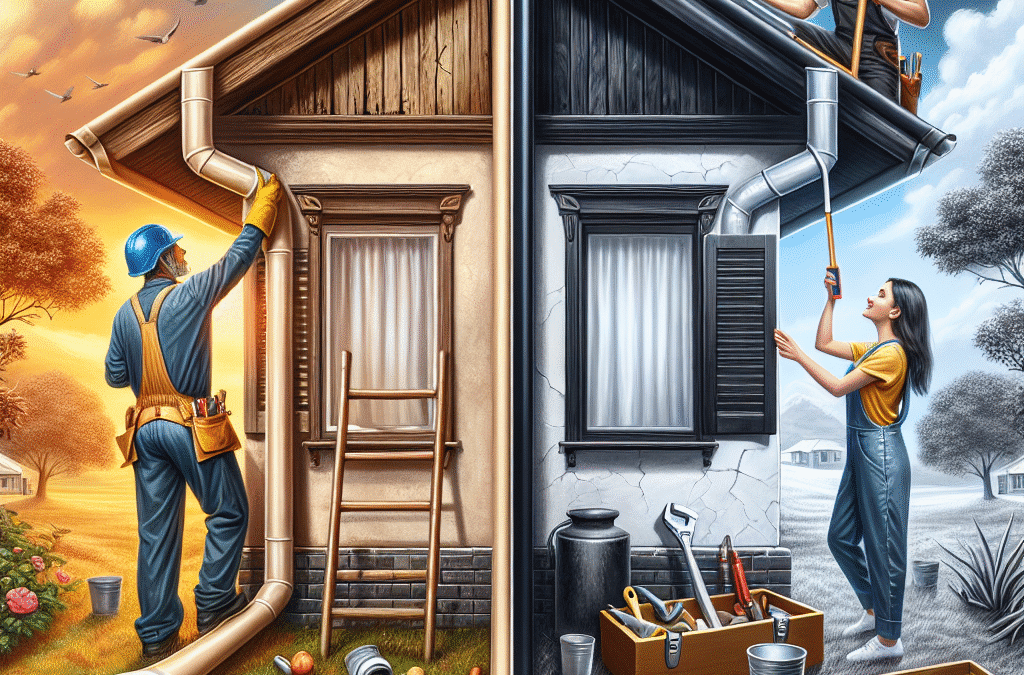
When it comes to protecting your home, every little detail matters—especially your gutters. You’ve probably noticed them lining your roof, dutifully directing rainwater away from your foundation, and keeping your home safe from potential water damage. But what happens when these trusty gutters start to show signs of wear and tear? Many homeowners face the tough decision: should you repair the existing gutter system or invest in an entirely new setup? It’s not just about aesthetics or even immediate functionality—it’s a balancing act between maintaining your home’s integrity and staying within your budget. In this article, we’ll delve into the key aspects you need to consider when deciding between gutter repair and replacement, helping you make the best choice for your home. From understanding the common issues that plague gutters to evaluating the costs and benefits of new versus old, we’ve got you covered. Let’s navigate this decision together to safeguard your home for the years to come.
Understanding Gutter Damage: Signs You Can’t Ignore
Your gutter system plays a crucial role in safeguarding your home from water damage, but like any exterior component, it can suffer from wear and tear. Recognizing the signs of damage early can prevent more severe issues down the road. So, what are the telltale signs that you need to either repair or perform a complete gutter replacement?
Common Gutter Problems
When examining your gutters, you may notice some common issues that can impact their effectiveness. Leaks are a frequent problem, often caused by cracks or holes that can lead to water dripping or pooling around your home’s foundation. Sagging sections indicate that your gutters may not be aligned correctly, causing water to overflow rather than being channeled away properly. Another sign of trouble is when gutters detach from the fascia, either from strong winds or age-related wear, which might leave parts of your system hanging precariously. Lastly, visible rust or corrosion is a clear sign that the material has begun to degrade, affecting not only the gutter’s appearance but also its structural integrity.
Each of these issues, if left unaddressed, can compromise your entire gutter system’s functionality, leading to potential damage to your home’s foundation, siding, and even landscaping.
Assessing Damage Severity
Once you’ve identified visible gutter problems, the next step is assessing their severity. Damage can typically be classified into three categories: minor, moderate, or severe. Minor damage might involve small leaks or slightly loose fasteners, which are often fixable with a straightforward gutter repair job. This could involve patching small holes or tightening screws, both of which are relatively affordable and quick solutions.
Moderate damage might necessitate more intensive repairs, such as replacing entire sections of gutter or addressing multiple leaks and issues within the system. This type of repair is more involved and may involve replacing damaged hangers or sections to ensure water continues to flow properly.
However, when the damage is widespread, characterized by multiple problem areas throughout the entire gutter system, it might be time to consider a full replacement. Similarly, if your gutters exhibit severe problems like significant sagging, extensive rust, or frequent detachment from the house, a replacement provides a more comprehensive solution that ensures the longevity and effectiveness of your home’s drainage system.
While assessing gutter damage and deciding between repair or replacement, it’s vital to consider the material of your gutters and their age. For instance, if your gutters are relatively new and made from a durable material like copper or aluminum, repairs might suffice. On the other hand, older systems, especially those with repeated issues, might benefit from an upgrade.
Ultimately, evaluating damage severity involves balancing immediate repair costs against the potential long-term benefits of a new gutter system. Addressing problems early with either method will help protect your home from potential water damage, aligning with your maintenance and budget goals.
By staying vigilant and informed about your gutter’s condition, you can make timely decisions that keep your home’s exterior in top shape, without succumbing to more costly repairs caused by neglected problems.
The Cost Factor: Repair vs. Replacement
Gutter Repair Costs Breakdown
The decision to repair or replace gutters often hinges on cost considerations. Understanding the typical expenses involved is crucial. For minor repairs, such as fixing small leaks or securing loose sections, homeowners can expect to spend between $100 and $300. This relatively low investment can effectively prolong the life of your gutters when issues are isolated and easily manageable.
For moderate repairs, like replacing sections or addressing multiple problems, costs typically range from $300 to $600. Such scenarios often arise when damage extends to several areas along the gutter system but isn’t uniformly severe throughout.
Major repairs, where significant damage must be addressed comprehensively, might set you back anywhere from $600 to $1,000. The extent of damage, the complexity of repairs required, and the accessibility of the gutters contribute to the overall cost.
Notably, the type of material influences repair costs significantly. Vinyl gutters are often more affordable to repair, while copper gutters, though prized for their aesthetics and durability, are the most expensive. This cost variance is an essential consideration when assessing repair options.
Investment in New Gutters
When contemplating a complete gutter replacement, the expense is naturally higher, but the long-term benefits often justify the initial outlay. The overall cost depends on home size and material choice, which significantly impacts the price range.
- For smaller homes (about 1,000 sq. ft.), expect to pay between $600 and $4,800, with prices varying according to the material selected.
- Medium-sized homes (around 2,000 sq. ft.) might see costs range from $1,200 to $6,400, influenced heavily by the gutter material’s quality and durability.
- Large homes (3,000 sq. ft. or more) typically fall within the $1,800 to $8,400 spectrum, again depending on material choice.
Investing in new gutters can seem daunting at first, especially when high-quality materials are chosen for their longevity and minimal maintenance needs. However, choosing to install new seamless gutters can often lead to savings down the road by reducing the frequency and cost of repairs, as well as offering substantial aesthetic and functional improvements.
Ultimately, the choice between repairing or replacing gutters involves weighing upfront expenses against potential long-term benefits. While repairs can be cost-effective for minor issues, investing in new gutters often provides greater protection and value for your home over time. As you consider this investment, remember to take into account your specific home needs, budget constraints, and long-term maintenance goals.
Conclusion
Deciding between gutter repair and replacement is a crucial component of home maintenance that can significantly impact both the longevity of your home’s protective systems and your budget. Functional gutters are essential to safeguarding your house from water damage. As outlined, recognizing the signs of damage, assessing its severity, and considering the material and associated costs are key steps in making an informed decision.
Repairing can be a wise choice for minor, isolated issues, particularly if your gutters are relatively new and made from high-quality materials. On the other hand, investing in a complete gutter replacement is often the better route when facing extensive damage, when the gutters are nearing the end of their lifespan, or if you seek to enhance your home’s overall value and protection.
Ultimately, while initial costs for new gutters may be higher, the potential savings on future maintenance and the protection they offer from significant water damage can outweigh these upfront expenses. Evaluating your specific home needs, understanding the characteristics and lifespan of different materials, and considering long-term plans are all imperative to making the right investment for your home.
Making the Smart Choice: Repair or Replace?
When Repair Makes Sense
Making the decision to repair your gutters can often be the smartest choice, especially in a few specific scenarios. Consider choosing repair when the damage is confined to certain sections rather than the entire system. If your gutters are less than 10 years old and only need a little TLC, a repair can extend their lifespan without hitting your wallet too hard.
Budget constraints also play a significant role in this decision. For many homeowners, it might be more feasible to tackle individual repairs rather than investing in a full replacement. Furthermore, if your existing gutters are made from a high-quality material and retain good structural integrity, repairing what’s already there can be more beneficial.
Signs It’s Time for Gutter Replacement
On the flip side, several signs indicate that it’s time to consider gutter replacement. If you find yourself needing multiple repairs across the system, it may be more cost-effective to replace the entire setup. Also, if your gutters are approaching or beyond their expected lifespan—usually around 20 to 30 years depending on material—they’re likely due for an upgrade.
Frequent clogs, visible sagging, or areas where the gutters are pulling away from the house are also red flags. Not only do these issues compromise functionality, they also pose risks for more severe water damage, such as to your home’s foundation or landscaping. Investing in new gutters now can save you from substantial repair costs in the future.
Material Considerations for Longevity
The type of material your gutters are made of is another crucial factor in deciding between repair and replacement. Different materials come with varying lifespans and maintenance needs. For instance, vinyl gutters, typically lasting 20 to 25 years, are a budget-friendly option, though they may not be as durable in harsh weather.
Aluminum gutters are commonly used due to their balance between cost and durability, with a lifespan of about 20 to 30 years. Steel gutters, though heavier, can last 20 to 40 years, marking them as a sturdy, long-lasting choice. Copper gutters stand out with an impressive lifespan of over 50 years, providing a premium option with low maintenance; however, their initial cost is significantly higher.
Choosing the right material affects not just the immediate cost but also the long-term maintenance and durability of your gutters. While some materials might demand a higher upfront investment, their resilience and longevity can lead to less frequent repairs or replacements, ultimately offering superior long-term value.
FAQs
How do I know if my gutters need repair or complete replacement?
Isolated issues such as small leaks or a few loose hangers usually indicate that repairs, which typically cost between $100 and $300, are sufficient. However, if you experience widespread problems throughout the system, significant sagging, or if your gutters are older than 20 years, replacement is likely a better investment. For borderline cases, it’s advisable to seek a professional assessment.
What are the average costs to repair versus replace gutters in 2025?
The cost to repair gutters typically ranges from $150 to $650 depending on the extent of damage and the gutter material. For a complete replacement, expenses usually fall between $2,000 and $6,000 for an average home. While seamless gutters cost more initially, they can potentially save money in the long run due to reduced maintenance and repair needs.
Can I repair my gutters myself or should I hire a professional?
Minor repairs, such as clearing clogs or tightening fasteners, can often be tackled as DIY projects. However, be cautious as improper repairs may void warranties or lead to further damage. Hiring a professional ensures correct gutter pitch, secure mounting, and the use of appropriate materials tailored to your home’s specific needs and local climate conditions.